
deNOx – SNCR

DRY FGD
1 February 2020
ODOR CONTROL SYSTEMS – H2S
1 February 2020

SNCR (Selective Non-Catalytic Reduction); It is a method used to contain NOx emissions from combustion reactions. Its principle is based on the reaction with chemicals such as NH3 and urea [CO (NH2) 2]. Although it has an economical and practical technology, it requires precise engineering calculations.

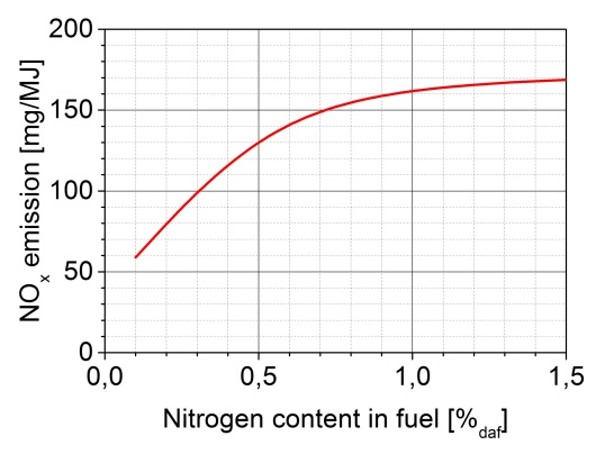
The NOx concentration generated during combustion depends on a number of different factors, including: combustion air excess, temperature, mixing and residence time. However, when burning fuel, it is the nitrogen content of the fuel that normally determines the plant’s basic NOx level most predominantly. The figure below shows experimental values for how NOx emissions are typically affected by the nitrogen content of the fuel.
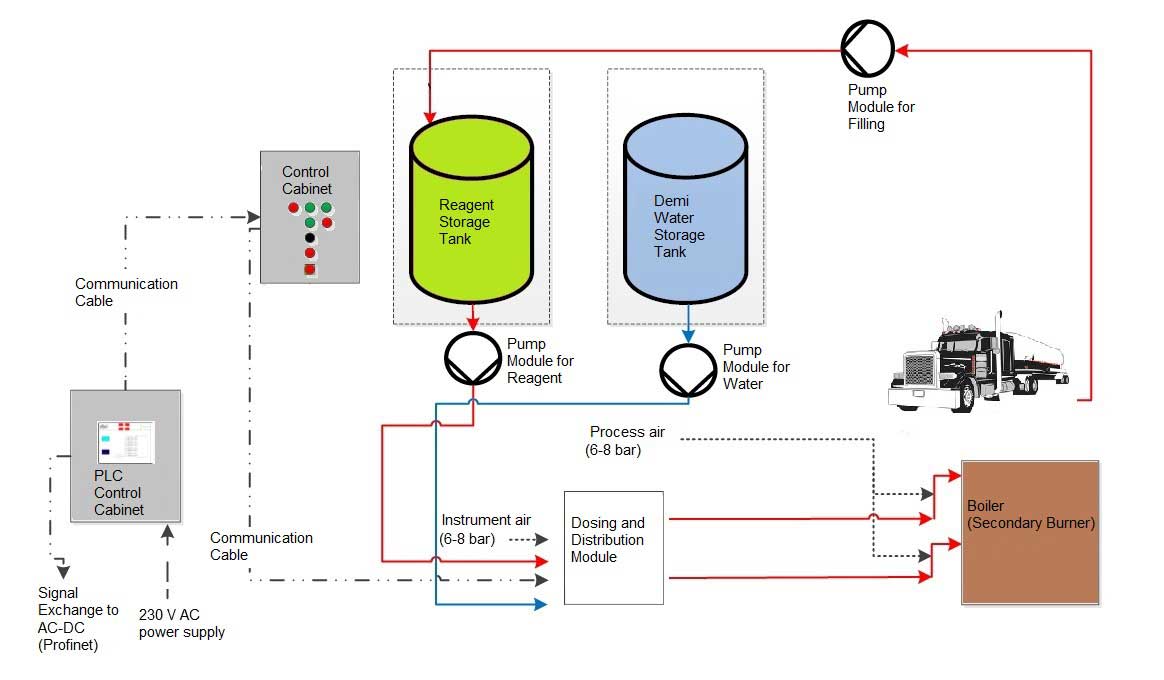
The NH3 solution, which is sprayed into the furnace with pressurized air and water in the range of 850 ℃ ~ 1000 ℃, reacts rapidly with NOx and turns into N2 and other by-products. When applied at very low temperatures, below about 800 ℃, all of the ammonia leaves the system without reacting. When applied above 1100 ℃, sprayed ammonia on the contrary increases NOx emissions. The most efficient operating temperature is usually around 950 ℃. However, as the CO concentration in the flue gas increases, this temperature is pulled down. The emission reduction efficiency of SNCR technology is around 50-60% on average. And this value can go up to 80% in the best design.